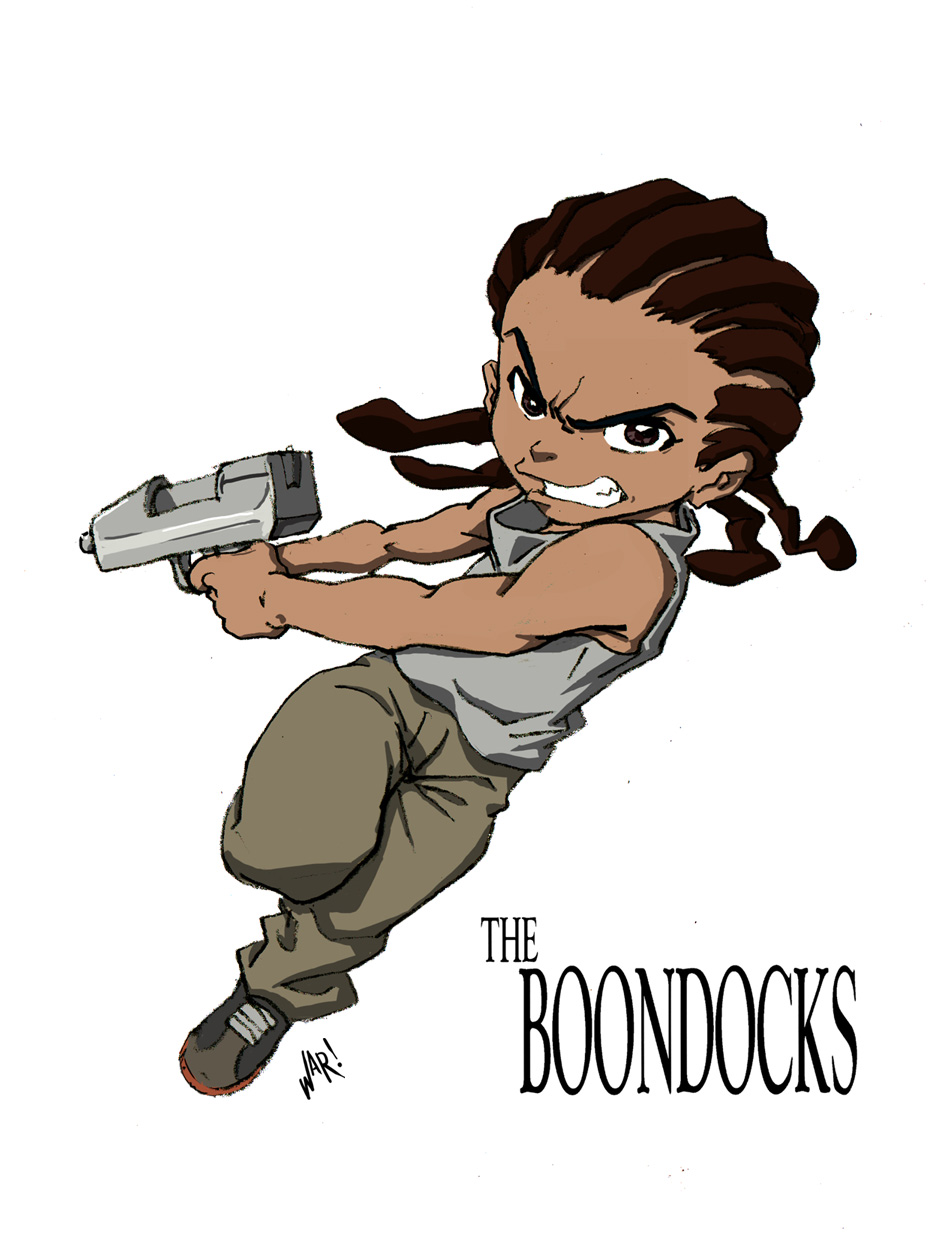
 They Shootin'!
"It's about Tyler Perry...you might not like it." That's what my brother told me earlier today as we discussed last night's episode of The Boondocks. I tried to stay up and watch it at 2:30 since I got in late last night, but I just couldn't hang. I caught it on the internet today, and boy oh boy oh boy! They're coming at the homie. Tyler Perry has been officially called out!
There's plenty of criticism to doled out on both sides. Michael Arceneaux, writer and blogger, via his twitter account (@youngsinick) offered some well-said concerns: "Oh about the Boondocks: I think Aaron's better when he's more subtle in his satire. The episode was funnier than others this season, but the show seems more about shock & awe now than commentary." I think this is a valid argument with this particular episode and this season. From the opening scene of the episode to the end, you're met with extremes and exaggeration. After all, that is part of what satire is about, but there are more finite statements than room for thought or entreat for dialogue. It's more of, "This is my stance. Tyler Perry is gay. His plays/movies are ignorant. The audience is misguided in buying into it simply because Jesus is in it. It's formulaic. Deal with it." Some subtlety and a bit more depth would be helpful, but it is only a 2o minute episode.
The Boondocks episode pointed out some very serious points, though. Is there a formula to Tyler's work? Sure. The hot men are definitely there as well as a woman who needs to rise above back-breaking circumstances, all to attract the buying power of the black woman. Put in some "Jesus," and you can get the older black Christians for a good time as well as the young Christians looking for a "wholesome" time at the show. And like many Christians, if a book, tv show, movie, or whatever is Christian, they will fight and defend it in any way. Also, African Americans sometimes have the great intention to support their people, although the works may be questionable, tactless, and uninspiring. Like all movies, there's some manipulation of the fanbase that makes Tyler virtually untouchable.
There's a lot of questions to ask and answer, however. Are Tyler's movies and plays wanting of depth and a good, authentic representation of African American's and the African American experience? Of course. Can he sometimes put a good story on the backburner simply for shock and seats? Definitely. Can Tyler write an ending to save his life? Not at all. Is his work predictable? Absolutely. The criticism goes on and on; I could save that for another day. Some of these are questions The Boondocks bring up, and they're valid, and certainly needed to be said.
However, I would aver that through all of this, there are some good things about Perry's work. I think it points out the need for self-preservation, the importance of love, the necessity of stable, viable relationships with anyone, and in many of them African Americans are shown in high positions like lawyers, successful entrepreneurs, businessmen and businesswomen, etc. Some of his plots are engaging, inducing laughs, tears, thought, shock, and more. Does it negate the criticism? Absolutely not, but it sheds light on what Tyler tries to do for the black community and for the sake of story in the midst of his failures.
The Boondocks, too, harped on the issue of Perry's sexuality. Although Perry has acknowledged that he is heterosexual and refuses to focus on that question anymore, the speculation still lingers. Whether or not Perry is gay is inconsequential, and I don't think it factors significantly into his work. While Perry has controversially exploited homosexual stereotypes in Why Did I Get Married Too?, The Boondocks have done the same by inadvertently demonizing homosexuality through its Winston Jerome character. That didn't sit too well with me, and took away from the criticism of Tyler's work as a writer. Jabs at sexuality don't add to the conversation and are a mere distraction from the topic at hand---Tyler Perry's role as an African American writer and cultural icon.
So there's a lot to consider in this episode. Tyler's reputation and credibility as a writer has been questioned many times, even by Spike Lee, but The Boondocks has reached a wider, more diverse audience than the comments that Spike and more have made. It would be interesting to see Tyler respond to this as well as the substance of his work post-Boondocks roast. I think the strides Perry has made is important for the African American community, and his ability to reach audiences and have them turn out in large numbers at the theatre is commendable and impressive. However, Perry is not invincible. His work definitey warrants criticism, but it should be made legitimately, with evidence, and with intelligence. The Boondocks tried to get there but lacked the necessary graciousness to make an intelligent and thoughtful argument that we could dissect and discuss. Aaron McGruder is on the right track, but needs to take it down a notch. The comedy cannot supersede the claims.
There's plenty of criticism to doled out on both sides. Michael Arceneaux, writer and blogger, via his twitter account (@youngsinick) offered some well-said concerns: "Oh about the Boondocks: I think Aaron's better when he's more subtle in his satire. The episode was funnier than others this season, but the show seems more about shock & awe now than commentary." I think this is a valid argument with this particular episode and this season. From the opening scene of the episode to the end, you're met with extremes and exaggeration. After all, that is part of what satire is about, but there are more finite statements than room for thought or entreat for dialogue. It's more of, "This is my stance. Tyler Perry is gay. His plays/movies are ignorant. The audience is misguided in buying into it simply because Jesus is in it. It's formulaic. Deal with it." Some subtlety and a bit more depth would be helpful, but it is only a 2o minute episode.
The Boondocks episode pointed out some very serious points, though. Is there a formula to Tyler's work? Sure. The hot men are definitely there as well as a woman who needs to rise above back-breaking circumstances, all to attract the buying power of the black woman. Put in some "Jesus," and you can get the older black Christians for a good time as well as the young Christians looking for a "wholesome" time at the show. And like many Christians, if a book, tv show, movie, or whatever is Christian, they will fight and defend it in any way. Also, African Americans sometimes have the great intention to support their people, although the works may be questionable, tactless, and uninspiring. Like all movies, there's some manipulation of the fanbase that makes Tyler virtually untouchable.
There's a lot of questions to ask and answer, however. Are Tyler's movies and plays wanting of depth and a good, authentic representation of African American's and the African American experience? Of course. Can he sometimes put a good story on the backburner simply for shock and seats? Definitely. Can Tyler write an ending to save his life? Not at all. Is his work predictable? Absolutely. The criticism goes on and on; I could save that for another day. Some of these are questions The Boondocks bring up, and they're valid, and certainly needed to be said.
However, I would aver that through all of this, there are some good things about Perry's work. I think it points out the need for self-preservation, the importance of love, the necessity of stable, viable relationships with anyone, and in many of them African Americans are shown in high positions like lawyers, successful entrepreneurs, businessmen and businesswomen, etc. Some of his plots are engaging, inducing laughs, tears, thought, shock, and more. Does it negate the criticism? Absolutely not, but it sheds light on what Tyler tries to do for the black community and for the sake of story in the midst of his failures.
The Boondocks, too, harped on the issue of Perry's sexuality. Although Perry has acknowledged that he is heterosexual and refuses to focus on that question anymore, the speculation still lingers. Whether or not Perry is gay is inconsequential, and I don't think it factors significantly into his work. While Perry has controversially exploited homosexual stereotypes in Why Did I Get Married Too?, The Boondocks have done the same by inadvertently demonizing homosexuality through its Winston Jerome character. That didn't sit too well with me, and took away from the criticism of Tyler's work as a writer. Jabs at sexuality don't add to the conversation and are a mere distraction from the topic at hand---Tyler Perry's role as an African American writer and cultural icon.
So there's a lot to consider in this episode. Tyler's reputation and credibility as a writer has been questioned many times, even by Spike Lee, but The Boondocks has reached a wider, more diverse audience than the comments that Spike and more have made. It would be interesting to see Tyler respond to this as well as the substance of his work post-Boondocks roast. I think the strides Perry has made is important for the African American community, and his ability to reach audiences and have them turn out in large numbers at the theatre is commendable and impressive. However, Perry is not invincible. His work definitey warrants criticism, but it should be made legitimately, with evidence, and with intelligence. The Boondocks tried to get there but lacked the necessary graciousness to make an intelligent and thoughtful argument that we could dissect and discuss. Aaron McGruder is on the right track, but needs to take it down a notch. The comedy cannot supersede the claims.

Where's Aaron McGruder so I can pop a cap in his ass?
I must issue a slap for Tyler Perry for setting this all in motion, and another slap is on the way if you don't shape up, mister!


No comments:
Post a Comment